 Flex Your Idea
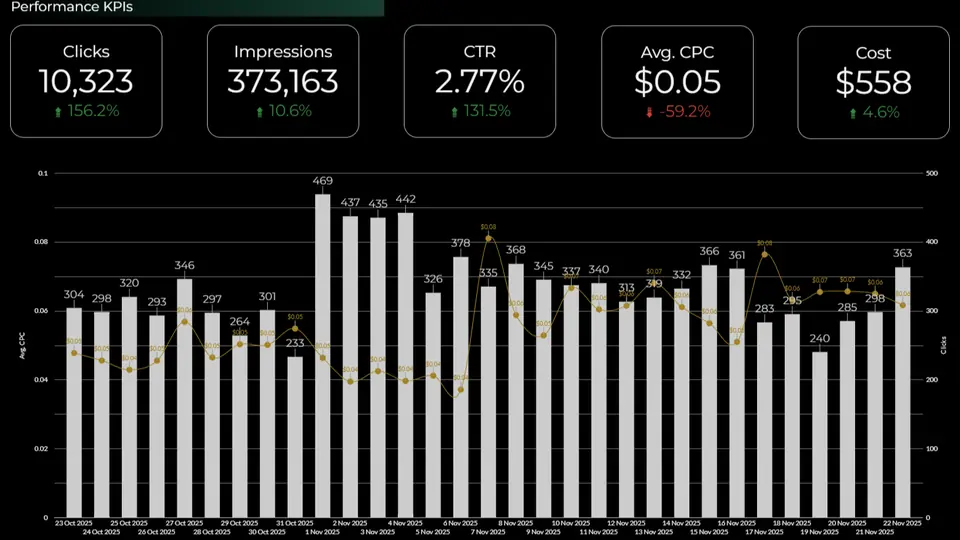
Audit-Ready Confidence
Comprehensive setup reports give you full ownership and transparency over your analytics infrastructure. If I leave tomorrow, you keep everything.
Every site I deliver ships with SEO foundations, Meta Pixel and social tracking, Google Ads tagging and one unified analytics view. The day your site goes live, your marketing infrastructure is already running.
*SVS = Search Visibility Score

Most agencies hand you a website. I hand you a website that's already wired into the four systems your business needs to perform from day one.
Technical SEO, on-page structure, schema markup, internal linking, sitemap and indexation. Every page is built to be found.
Meta Pixel, TikTok Pixel and platform-native event tracking configured properly. Your audience pools start building from launch day.
Google Tag, GA4, conversion tags and enhanced conversions, wired through Google Tag Manager. Ready for Performance Max and Search from day one.
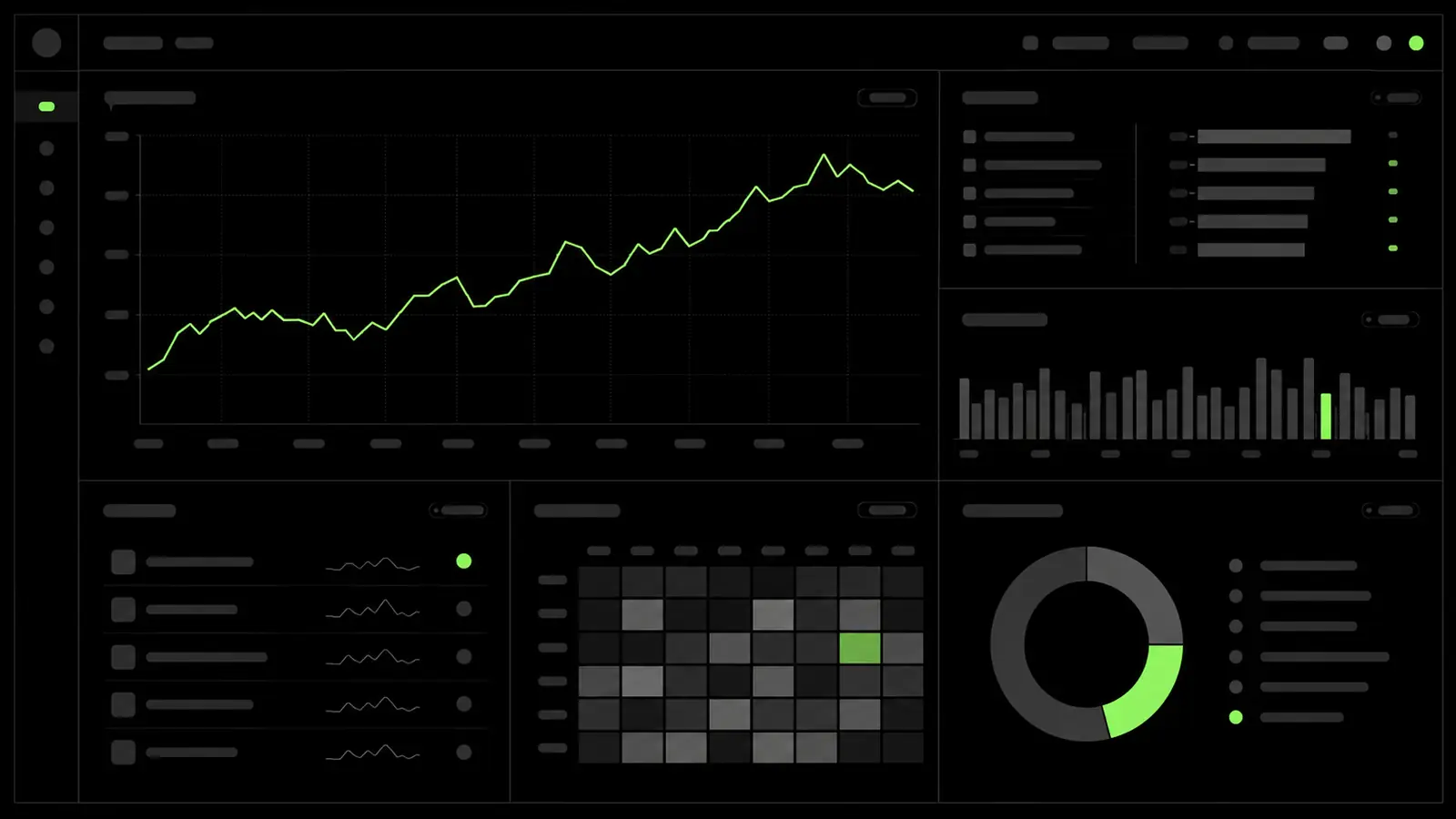
One reporting layer that pulls SEO, social, ads and on-site behaviour into a single view. No more switching between five dashboards.
Schema, sitemap, heading structure, internal links and content architecture. Wired in during the build, never patched after.
Meta Pixel, TikTok Pixel, event tracking, custom audiences. Your retargeting pool starts the moment your site is live.
Google Tag, GA4, Google Ads conversion tags, enhanced conversions and GTM. Switch on Performance Max or Search whenever you're ready.
Pull SEO, social, ads and on-site behaviour into a single dashboard. The whole ecosystem reports to you, not to four separate platforms.

Both look the same on launch day. Only one performs after. This is the difference between a website and a working digital business.
Three reasons clients tell me they slept better after I rebuilt their analytics infrastructure.
Comprehensive setup reports give you full ownership and transparency over your analytics infrastructure. If I leave tomorrow, you keep everything.
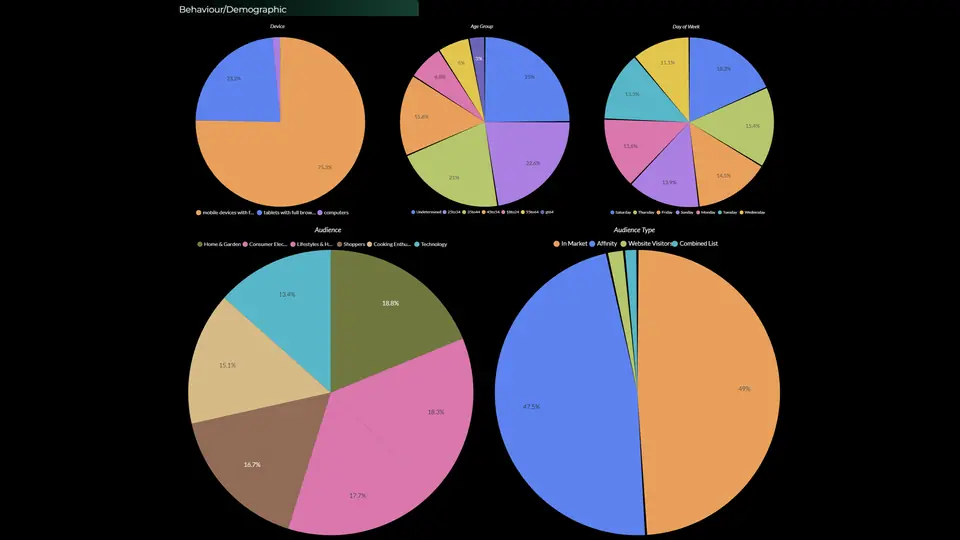
Correct tag configuration moves you beyond vanity metrics. I track actual user behaviour so your decisions are based on signal, not on dashboards built for someone else's business.
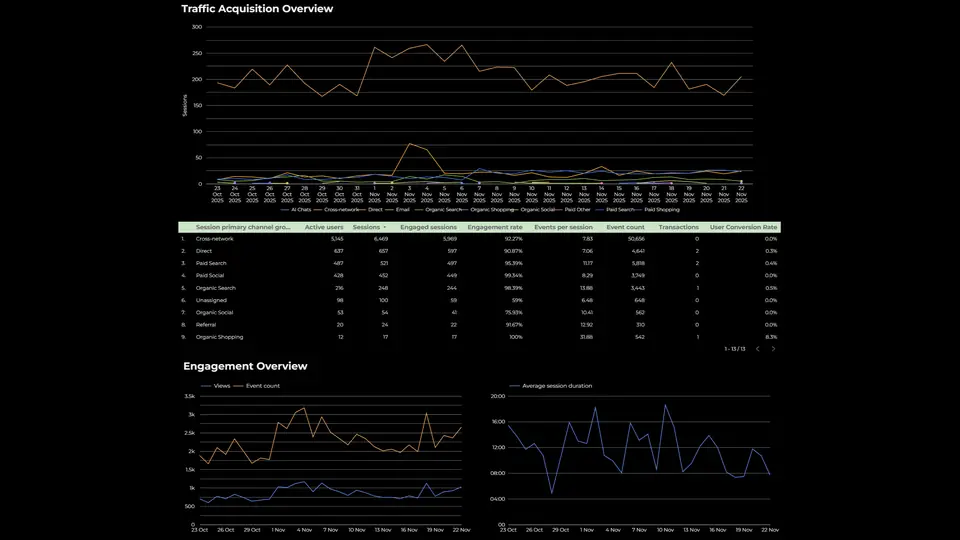
This is not just a dashboard. It is the blueprint of your business intelligence. Every data stream is documented so nothing is lost in translation.
Eliminate FLUFF reports.
B2C wellness storefront with full SEO foundation, HubSpot CRM integration and lead-flow analytics. Built for organic growth and email-led re-engagement.
Dual-funnel build supporting B2B coffee solutions for offices and cafes, alongside B2C product sales for home coffee machines and beans. Meta Pixel and Performance Max wired in.
B2C storefront for an independent streetwear label. Meta and TikTok Pixel, content-led SEO and Klaviyo retargeting flows wired into the build.
I started Flex Your Idea after spending almost ten years inside the search and digital marketing engine of Omnicom Media Group, where I led search for brands including Singapore Airlines, Chanel, IKEA, HSBC, Audi, Porsche, Changi Airport Group and Resorts World Cruises.
What I learnt at that scale was simple. SEO, paid search, social tracking and analytics are not separate disciplines. They are one system. The reason most SME websites underperform is not the design. It is that those four layers were never connected to each other in the first place.
My agency exists to give SMEs the same infrastructure thinking the enterprises pay millions for, at a price that makes sense for a Singapore small business.









Brands Christopher led search for as Search Lead at Omnicom Media Group Singapore.
Integrations with socials, ads and marketplaces that actually work. Bolted-in, not bolted-on.
Websites that are affordable, SEO-ready and secure from day one. Every shortcut is documented, never silently taken.
Optimisation for Google today and AI search tomorrow. Schema, entity clarity and content depth, not keyword stuffing.
Transparent hourly billing with a full breakdown in every proposal. No hidden costs, no surprise invoices.
I educate as I build, so your team gains skills, not just services. The infrastructure stays with you.
Answered upfront, so we can spend the actual call on your business, not on disclaimers.
No. SEO is part of every website I build. Technical SEO, on-page structure, schema markup and content architecture are baked into the build from the first wireframe. You do not pay for SEO as a separate retainer to make the site functional.
Yes. Meta Pixel, TikTok Pixel, Google Tag, GA4 and conversion tags are configured during the build and verified in tag manager before launch. You can run Performance Max, Search or Meta ads from the day your site goes live.
Both. I recommend the platform based on your business model. Wix for service businesses, B2B and content-heavy sites with optional agentic AI features. Shopify for product-led B2C and retail. I will tell you which fits in the first call.
Transparent hourly billing with a full breakdown in every proposal. No hidden retainers, no surprise invoices. You see what every hour goes towards.
I can retrofit the digital ecosystem onto your existing site. SEO audit, pixel and tag installation, analytics rebuild and reporting layer can be added without rebuilding the whole site, if the foundation is sound.
Basic builds run 3 to 4 weeks. Core builds run 6 to 8 weeks. Premium builds run 8 to 12 weeks. Final timeline is confirmed in the proposal after the scoping call.
Former Search Lead at Omnicom Media Group Singapore, the regional headquarters for South-East Asia. With over a decade of hands-on experience in search marketing, I have led digital visibility strategies for some of the world's most recognised brands.
I started learning SEO in 2013, back when I was helping company with UI/UX improvements and full website revamps. That early exposure to how design, code, and search intersect shaped everything that followed.
From there, I moved into the agency world and eventually joined Omnicom Media Group Singapore as Search Lead, where I managed search strategies across both B2B and B2C verticals for multinational brands. Working at a global network agency operating out of the South-East Asia headquarters gave me a front-row seat to how enterprise-level campaigns are planned, executed, and optimised at scale.
Singapore Airlines, KrisFlyer, Chanel, IKEA, HSBC, Audi, Porsche, Changi Airport Group, MyCareersFuture, and Resorts World Cruises, among others. Each represents real campaigns with real budgets, real KPIs, and real accountability. The rigour I built working with these brands is the same rigour I bring to every client at Flex Your Idea, regardless of size.


During the COVID-19 period, while the world was on pause, I took a leap. What started as a creative side project selling oversized graphic tees became a masterclass in e-commerce, branding, and digital execution from the ground up. As the market shifted, so did I. Local SMEs needed help building their digital presence fast, and I realised I could bring the strategic depth of a network agency to businesses that would never normally have access to it. That became the founding principle of Flex Your Idea.
At Flex Your Idea, SEO is baked into every website from the very first line of code. Our core USP is delivering fast, fully search-optimised websites where deep SEO is integrated directly into the development process, not bolted on as an afterthought. This means your site launches ready to rank, not waiting months for fixes.
With close to a decade of search experience, a background in global agency operations, and a founder who still personally oversees every project, your digital marketing is in the hands of someone who has done this at the highest level.
To give small and growing businesses access to the same calibre of digital strategy used by the world's biggest brands. No jargon, no inflated promises. Just clear strategy, measurable growth, and a partner who genuinely understands how search, content, and technology work together to drive results.
Since our pivot, we've helped dozens of local brands move from "offline and invisible" to digital and discoverable. We've built websites that convert, created content that ranks, and run campaigns that actually bring in leads.
Because at the end of the day, Flex Your Idea isn't just a marketing agency, it's a mindset. A belief that creativity and strategy, when combined, can flex any idea into something powerful.
Buyers no longer start at one search box. They ask Google, then they ask an assistant, and both have to arrive at your name.

A ranking algorithm decides where you appear in a list. An answering model decides whether you get mentioned at all. They read the same page and judge it on different evidence, and most Singapore SME sites are built for neither.
Ranking wants crawlable structure, speed, topical depth and authority earned off your own domain. Answering wants unambiguous statements, parseable structured data, and facts consistent enough that repeating them is safe.
SEO earns you a position in a list of links. Generative Engine Optimisation, or GEO, earns you a mention inside a generated answer from ChatGPT, Gemini, Claude or Google's AI results.
The work overlaps, but the target differs: an assistant needs facts it can lift, attribute and trust, so structured data, clear definitions and consistent entity information matter far more than they do for a classic ranking.
Assistants ground their answers in indexed web content. A page Google cannot read is a page ChatGPT cannot cite. Classic SEO stopped being a separate channel and became the entry requirement for everything after it.
Two workstreams that feed each other. Neither works properly alone.
Search engine optimisation
AI search optimisation (GEO)
Your competitor does not need to outrank you. A list of links gives ten businesses a chance. A generated answer usually names one or two, and the buyer rarely scrolls past it to check the others.
A full technical scan, crawl and index diagnosis, and a map of your services against both search intent and the questions people put to an assistant. You get the findings whether or not you go further.
Speed, structure, metadata and schema. Unglamorous and non-negotiable: this is the runway everything after it depends on.
High-intent pages, FAQs, comparisons and guides, laid out so a buyer can scan them and an assistant can quote them, then wired together with internal links.
Credibility built off your own domain: quality mentions, expert commentary, original data, and consistency across every platform that describes you.
Rankings, organic visibility and conversion rate, plus which of the four surfaces is citing you. The next round of work is then chosen from evidence rather than instinct.
Most SEO reporting is designed to look like work. Ours is designed to be read in five minutes by someone who has a business to run.
SEO earns you a position in a list of links. AI search optimisation, also called Generative Engine Optimisation or GEO, earns you a mention inside a generated answer. The work overlaps, but the target differs: an assistant needs facts it can lift, attribute and trust, so structured data, clear definitions and consistent entity information matter far more than they do for a classic ranking.
Yes, and more than before. Assistants ground their answers in indexed web content, so a page that cannot be crawled or understood cannot be cited. Classic SEO has become the entry requirement for AI visibility rather than a separate channel competing with it.
Technical and structural fixes register within days of a recrawl. Ranking movement on competitive Singapore terms is a matter of months rather than weeks, and depends heavily on where your authority starts. We agree the measurement window before work begins, so nobody is arguing about the goalposts later.
Usually not. Most sites need structural repair rather than replacement. We audit first and tell you plainly whether your platform can carry the work, because recommending a rebuild you do not need would be the easy sale rather than the right one.
We treat Google Singapore, ChatGPT, Claude and Gemini as four separate surfaces and track brand appearance on each, then report which questions surface you and which surface a competitor instead. Google carries the heaviest weighting, because it still carries the heaviest commercial intent.
Scope follows the audit rather than a package. We size the work against your current technical state, your competitive position and the terms actually worth winning, then quote against that scope. Nothing is bundled in that you would not have chosen.
Thirty minutes, no obligation, no pitch deck. We look at your site together and tell you what is holding it back. If the answer is that you do not need us yet, we will say so.
We believe every business deserves a professional, effective, and SEO-ready website without paying overpriced agency fees. Our approach is simple: low cost, high impact, and built for results.

We believe websites shouldn't be overpriced. You only pay for what truly matters: design, speed, SEO, and conversions. No bloated fees, no unnecessary extras. Just affordable Wix and Shopify sites built to rank, perform, and grow your business efficiently.
A clean-built website that loads fast, ranks better, and converts visitors into customers. SEO-focused development which allows you to feed the correct information to AI platforms.
Websites that scale as your business grows, without hidden upgrade fees. Ads-ready websites that let you start running ads on major platforms like Meta, Google or TikTok.
Both are hosted for you, secure and maintained by the platform, so you never pay a developer to patch a server. The question is what your website has to do for the business.
An all-in-one website builder and hosting platform. The right fit when your website's job is to win enquiries, bookings and trust.
A dedicated e-commerce platform and hosting solution. The right fit when your website's job is to sell products and move stock.
Not sure which fits? I will tell you in the first call.
Wix is an all-in-one website builder plus hosting platform. Shopify is a dedicated e-commerce platform plus hosting solution. Each gives you the speed to have a site ready for what your business needs.
We build SEO into your website from day one, so you only invest once. No wasted spend later on fixing poor optimisation or over-relying on ads. Your site is search-ready, cost-efficient, and designed to attract organic traffic right from the start.
Your website isn't just for show; it's your marketing engine. We integrate pixels, signals, and data tracking directly into your site so your ads work smarter, not harder. Every click is captured for accurate targeting and higher conversion ratios, including core ad platforms like Google, Meta and TikTok.
Why juggle multiple apps when your website can already do the heavy lifting? We can configure your CMS to let you create content once and push it directly across your social media channels, keeping your brand voice unified from one place.
Expand your reach without extra effort. Marketplace synchronisation lets your website connect directly with platforms like Lazada, Shopee, TikTok Shop, Etsy, and more. Manage inventory, pricing, and products in one place while selling across multiple channels.
We design with the user journey in mind from the very start. By identifying the pages that matter most for your business and embedding UI/UX best practices into the site flow, we save you from costly redesigns later. Every page is planned to guide visitors smoothly toward conversion.
Basic builds run 3 to 4 weeks. Core builds run 6 to 8 weeks. Premium builds run 8 to 12 weeks. Final timeline is confirmed in the proposal after the scoping call, and every build ships with SEO, tags and analytics already wired in.
Most sites have tracking installed. Far fewer have it installed correctly, and the difference only shows up when you try to make a decision with the data.
| Source | Reports | Purchases |
|---|---|---|
| Google Ads conversion tag | GA-conv | 312 |
| Meta Pixel | browser | 288 |
| GA4 purchase event | gtag | 241 |
| Orders in your bank | actual | 194 |
Four sources. Four different answers. Only one of them pays your bills.
Illustrative of the reconciliation gap this page describes. Not client data.
Reporting looks backwards at what already happened. Analytics decides where the next dollar goes. One is admin. The other is the input to every commercial decision you make this quarter.
Without numbers you can trust, three questions stay permanently unanswered, and every one of them is a budget decision:
The cost compounds. Every month of bad data is a month of budget allocated by guesswork, and that allocation repeats monthly. The damage is not one wrong report. It is a wrong habit, running unexamined.
Advertising platforms now optimise themselves using the conversion data you send them. Feed Google Ads or Meta the wrong signal and the platform does not simply produce a misleading dashboard. It goes and buys more of the wrong audience with your money, and it gets better at it every day.
This sits underneath your organic search performance too. Attribution decides whether search gets credit for the customers it earned.
You can skim the bold lines alone and still know whether this page is about you. Most businesses recognise at least two.
The same purchase counted twice, because a tag fires from the platform's native integration and from a manual install at the same time. Ecommerce is where this is almost universal.
A form submission counted on page load rather than on submit. The platform records a conversion every time somebody merely looks at the contact page.
Staff visits, staging traffic and internal testing all counted as genuine customer behaviour. The smaller your traffic, the more this distorts everything downstream.
Missing or broken UTM tagging means the channel that actually earned the sale gets no credit. It then looks unprofitable and gets cut. This is the worst outcome on the list, because the business actively destroys the thing that was succeeding.
A redesign, a theme update or a new checkout. The number does not drop to zero, which would be obvious. It just drifts, and drift is invisible for months.
Tags running before the visitor has decided, or blocked after they agreed. One creates a compliance exposure under Singapore's PDPA, the other leaves a hole in your data. Both are common and neither announces itself.
The genuinely common case, and the one nobody admits. Everyone assumed somebody else set it up during the website build.
A tag is a small piece of code on your site that reports one specific event to one specific platform. That is the whole idea. Everything else is detail.
What makes it fire. A page loading, a button being clicked, a checkout completing.
What happened, named consistently, with the values worth knowing attached to it. Naming is where most setups start to drift, because two people name the same thing differently.
Which platform gets told, and therefore which platform can act on it. One event often needs to reach several destinations at once.
That is the entire mechanism. The platform now knows which advertisement earned money, and spends accordingly.
Rather than hard-coding twenty separate scripts into your website, one container holds them all and controls when each one fires. That container is why Google Tag Manager keeps appearing in the list below. It is also why one broken container breaks every platform at once, and why fixing the container fixes all of them at once.
Client-side tagging reports from the visitor's browser, and is increasingly blocked by ad blockers, browser restrictions and consent tools. Server-side reports from your own server, which is more reliable and more work to set up. That is the trade-off, stated plainly. Not everyone needs the second one.
Read it top to bottom. A visitor does something, consent decides what may fire, one container collects it, the platforms receive it, and it ends at you deciding where the next dollar goes.
Wix, Shopify or WooCommerce. Page view, add to cart, form, purchase.
Cookie banner, Consent Mode v2. Decides what is allowed to fire.
dataLayer to Tag Manager. One container feeds everything; server-side GTM runs on your own server.
Browser and server route: Google Ads, Meta, TikTok. Browser only: LinkedIn, Microsoft UET, Pinterest, Snap, X. Your reporting layer: GA4.
Looker Studio dashboard: where the next dollar goes. Your budget is spent on whatever you report.
Outside the pipeline: Clarity and Hotjar record behaviour directly on the page.
Nothing reaches any platform until consent has been decided. That is precisely why consent cannot be bolted on at the end of a build.
Every advertising and measurement platform is fed by the same tag manager. One broken container breaks all of them simultaneously, and one fix repairs all of them.
Google Ads, Meta and TikTok each accept a browser route and a server-to-server route, which is what makes them resilient. LinkedIn, Microsoft UET, Pinterest, Snap and X are browser-only, so their numbers are the first to under-report. A logo chart hides that distinction entirely.
That loop is the whole argument. Those platforms do not merely receive your data, they spend your budget and build your audiences from it. Wrong tags steer your money.
If you recognise your own situation in this list, you already have your answer.
Platforms optimise on the conversion data you send them. Launching before tracking is correct means paying to teach the platform the wrong lesson, and that learning is difficult to undo.
Revenue, product performance and checkout drop-off all depend on correctly configured events. Ecommerce also carries the highest double-counting risk, because platform integrations and manual tags overlap. Often part of an ecommerce build.
The moment there are two sources of traffic, the only question that matters is which one deserves the next dollar. Attribution is the only thing that answers it, and that includes your social campaigns.
Tracking does not carry across a rebuild. This is the single most common way a working setup silently breaks.
A director, an investor, a partner or a franchisor. Numbers that will be questioned need to be defensible when they are.
The ad platform, the analytics and the actual sales all say something different. This is the symptom that most often brings people to this page.
Cookie consent and PDPA obligations now sit inside the tracking conversation rather than beside it.
Either direction, you need to know the measurement is yours and that it is correct.
Most setups fail because they were installed tool-first rather than question-first. That is the whole difference, and it is the second step below.
Establish what is currently installed, what is firing, what is double firing, and what is silently dead. You get the findings either way.
Decide what the business actually needs to know, then work backwards to the events required to answer it. Every setup we are called in to rescue was built the other way round.
One tag manager, documented, so the setup is legible to whoever inherits it after us.
Configured with the tags, not bolted on afterwards. The pipeline diagram above shows why the order matters.
Test transactions and test submissions, checked in every destination platform, not just in a preview mode that only proves the tag exists.
The business owns the accounts, the container and the documentation. We state that plainly because plenty of agencies do not, and readers have been burned before.
The data becomes a dashboard that gets opened. Otherwise the work is invisible and gets cut at the next budget review.
We build websites with the measurement infrastructure already inside them, rather than bolting analytics on afterwards. This page is what that claim actually means in practice.
Every item below is a thing you keep, in your own accounts, whether or not you carry on working with us. Nothing here is held on an agency login.
Do the two-minute version yourself. Take last month's conversions as reported in your advertising platform and compare them against the actual orders or enquiries you received. If those two numbers do not reconcile, something in the chain is wrong. That single check catches the majority of broken setups.
GA4 reports what happened on your site. It does not tell the advertising platforms what to optimise towards. Those are two different jobs, and only one of them decides how your budget gets spent.
Installing the base code is not the same as configuring events, conversions and consent. The base code is roughly a tenth of the work. It proves the site can talk to the platform. It does not decide what gets said.
Typically five to seven working days. What moves it is how many platforms are involved, and how much of the existing setup needs repairing rather than building from scratch. You get a firm timeline after the audit and before any work starts, so it is a commitment rather than an estimate.
Not everyone does. It matters most for ecommerce and for meaningful advertising spend, where browser-side losses to ad blockers and browser restrictions become material. If you are running a modest budget on a lead-generation site, it is usually not the first thing to fix.
You do. Always, and in your own name. The accounts, the container and the documentation stay yours whether or not you continue working with us.
Existing data stays as it is. A correct reconfiguration changes what is collected from that point forward, so history is not retrospectively fixed. Worth knowing before you expect old reports to change.
Yes, and both carry platform-specific traps. On Shopify the checkout is the difficult part, and its native channel integrations are a frequent cause of double counting. On Wix the built-in tag handling has to be reconciled with anything installed through a container, or you get two of everything.
We start by telling you what is currently broken. That part is useful to you even if you never hire us, which is exactly why we lead with it. No obligation. The audit findings are yours whether or not you go ahead with the work.
Field notes on search, AI, ads and building websites that perform, plus the Money and Mind essays.
Feel free to reach out to us for any questions. We're happy to help. I'll come back with a build plan within two working days.
I'll come back with a build plan within two working days.

No pitch deck. No upsell choreography. I ask about your business. You ask about my process. We decide if there's a fit.
Last updated: 21 October 2026
This Privacy Policy explains how Flex Your Idea Pte Ltd, which operates Flex Your Idea ("Flex Your Idea", "we", "us"), collects, uses, discloses and protects personal data in accordance with the Personal Data Protection Act 2012 of Singapore (the "PDPA"). It applies to personal data collected through this website and through our enquiry and messaging channels.
Flex Your Idea is a Singapore digital marketing and web development agency at 358C Ubi Road 3, #09-186, Singapore 403358, operated by Flex Your Idea Pte Ltd (UEN 202037714R).
We collect only what we need to serve you and to respond to you:
By submitting a form on this website or contacting us, you consent to our collection, use and disclosure of your personal data for the purposes in section 3. You may withdraw your consent at any time by contacting our Data Protection Officer (section 12). We will tell you the likely consequences of withdrawal, for example that we may no longer be able to provide a service you asked for, and we will process your request within a reasonable time.
We send promotional messages only to people who have agreed to receive them, and we observe the Do Not Call provisions of the PDPA. You can opt out at any time by replying to the message or by contacting us.
We do not sell personal data. We disclose personal data only where needed for the purposes above, or where required or permitted by law, including to:
Some of our service providers store data on servers outside Singapore. Where personal data is transferred overseas, we take reasonable steps to ensure that it receives a standard of protection comparable to that under the PDPA.
We protect personal data with reasonable security arrangements against unauthorised access, collection, use, disclosure, copying, modification or disposal. We keep personal data only for as long as it is needed for the purposes it was collected for, or as required for legal or business reasons, after which we delete or anonymise it.
This website uses cookies and similar technologies to work properly and to help us understand how it is used. You can set your browser to block or delete cookies, but some parts of the website may then not work as intended.
You may ask to access the personal data we hold about you and how it has been used or disclosed in the past year, and ask us to correct any error or omission. We may charge a reasonable fee for an access request, and will tell you the fee before we process it. We will respond as soon as reasonably possible.
If a data breach is likely to cause you significant harm, we will notify you and the Personal Data Protection Commission as the PDPA requires.
For any question about this policy or your personal data, or to withdraw consent, please contact:
Data Protection Officer
Flex Your Idea, 358C Ubi Road 3, #09-186, Singapore 403358
Email: info@flexyouridea.com
WhatsApp: +65 8399 6167
We may update this policy from time to time. The latest version will always be on this page, with the date it was last updated.
Last updated: 21 October 2026
Flex Your Idea is committed to making this website usable by as many people as possible, including people with disabilities.
We aim to meet the Web Content Accessibility Guidelines (WCAG) 2.2 at Level AA, published by the World Wide Web Consortium.
Some content on this website comes from third parties and is outside our direct control, including the Google Calendar booking page, WhatsApp and links to our LinkedIn profiles. Older blog posts and their images may not yet carry full text alternatives; we are working through them.
If you have difficulty using any part of this website, or need information in another format, please contact us at info@flexyouridea.com or on WhatsApp at +65 8399 6167. Please tell us the page and the problem, and we will do our best to help.
We review this statement as the website changes. It was last reviewed on 21 October 2026.
Last updated: 21 October 2026
These Terms of Use govern your use of this website, which is operated by Flex Your Idea Pte Ltd (UEN 202037714R), trading as Flex Your Idea. By using this website you agree to these terms. If you do not agree, please do not use the website.
We keep the information on this website accurate and up to date, but services, prices, opening hours and promotions may change without notice. Please check with us, or at the point of booking or ordering, for the latest details.
Enquiries and call bookings made through this website, WhatsApp or email are requests for information only. No contract for services is formed until we send you a written proposal or quotation and you accept it in writing. The scope, deliverables, timeline and fees in that accepted proposal govern our work for you.
The content of this website, including our name, logo, photographs and text, belongs to us or our licensors. You may view and share pages for personal, non-commercial use, but you may not copy, reproduce or reuse the content for any other purpose without our written permission. Reviews and testimonials shown on this website are the reviewers' own words.
You must not use this website for any unlawful purpose, submit false or misleading information through our forms, or attempt to interfere with the website's operation or security.
This website links to services run by others, including Google (Calendar and Meet), WhatsApp, LinkedIn and our Search Visibility Score tool. We are not responsible for their content, availability or privacy practices, and your use of them is subject to their own terms.
This website is provided on an "as is" basis. To the extent permitted by law, we are not liable for any loss or damage arising from your use of, or inability to use, this website. Nothing in these terms excludes or limits any liability that cannot be excluded or limited under the laws of Singapore.
Our Privacy Policy explains how we handle personal data collected through this website.
We may update these terms from time to time. The latest version will always be on this page, with the date it was last updated.
These terms are governed by the laws of Singapore, and any dispute is subject to the exclusive jurisdiction of the courts of Singapore.
Flex Your Idea, 358C Ubi Road 3, #09-186, Singapore 403358. Email info@flexyouridea.com or WhatsApp +65 8399 6167.
Tell me about your business. I'll come back with a build plan within two working days. Not a quote. A plan. So we both know what we are agreeing to before any number lands on the table.
No pitch deck. No upsell choreography. I ask about your business. You ask about my process. We decide if there's a fit. If yes, the build plan follows the same week.
I'll come back with a build plan within two working days.